

Derby Trail Forums

Go Back   Derby Trail Forums > Main Forum > The Paddock
Register FAQ Members List Calendar Today's Posts

Reply
 
Thread Tools Display Modes
  #1  
Old 09-15-2006, 10:46 PM
Rupert Pupkin Rupert Pupkin is offline
Del Mar
 
Join Date: Jun 2006
Posts: 5,102
Default

Quote:
Originally Posted by Bold Brooklynite
Do you think Sunny Jim Fitzsimmons didn't know these things? Or Ben Jones?

You're stating the obvious ... and treating it as though it were some kind of a revelation.

Trainers today simply aren't as good as trainers from decades ago ... because they don't have the same objectives. Essentially ... they aren't even in the same business.

Trainers of G1-potential horses once were in the business of taking young horses and developing them into professional athletes. Today they're in the business of protecting investments ... and attempting to hit the huge jackpot with their shares of one or two multi-million dollar syndications ... which will make them financially secure for the rest of their lives.

All of these responses keep dancing around ... and avoiding ... the very simple question that I asked ... so let me try again ...

If trainers today are so great ... have such deep understandings of their horses ... and how best to handle them ... AND ... if spacing races and having fresh horses is such a great strategy ...

... how come none of them or their methods have been able to develop a horse ... not a single one ... into a 2YO champion and a 3YO champion (and a 4YO champion)?
The reason I mentioned that the great trainers train every horse differently is because I was making the point that these good trainers can see how their horses respond to different things. If you were to believe Phalaris' theory, you would have to believe that these good trainers can't tell what works and what doesn't. If these trainers couldn't see the effects of their methods on each horse and be able to adjust their method based on how the horse is responding, then there would be no skill in training. Everyone could do it and everyone could do it equally well. You would just train every horse the same. You would gallop every horse 1 1/2 miles every day and work them every 6 days. Anyone could do that. If you did that, you wouldn't be successful. You need to adjust based on how your training is effecting the horse. But according to Phalaris, these trainers can't even tell what is effective and what isn't.

Your theory that trainers aren't as good as they used to be as based on the fact that no 2 year old champion wins the 3 year old championship is ridiculous. That would be like saying that basketball players are not as good these days because nobody ever scores 100 points any more like Wilt. The competition is tougher these days. The fact that nobody scores 100 points does not prove that the players aren't as good today.

Anyway, there are numerous possible other reasons as to why no BC Juvenille has won the Derby. One reason is that the horses today are not as sound as they used to be and if you run too many times as a 2 year old you may not be as effective as a 3 year old. Another reason is that some trainers don't want to even try it because they see that horses that win the BC Juvenille have never won a Derby. To win the BC Juvenille, a horse needs to have at least 2-3 races under his belt. Most trainers know this and they don't want to push their horse. They'd rather take their time and point for the Derby and skip the BC Juvenille. I think it is tough to win the BC Juvenille and the KY Derby but I think it can be done and I think it will be done in the near future. I think that many of the good trainers are figuring out the best way to win both races. In my opinion, the best way is to plan for the BC Juvenille to be your horse's 3rd or at the most 4th career race. Then the horse should get a rest after the BC Juvenille and should have 3 preps in their 3 year old year. That way the Derby would be the horse's 7th or 8th career start. In general, that seems to be a good number of races. It's not too few and it's not too many. As everyone knows, no horse has ever won the Derby that didn't run as a 2 year old, so we know that a horse needs to at least have a decent amount of conditioning under their belt to win the Derby. A horse with only 2-3 career races is not going to win the Derby. How do I know? I know because it never happens. Just like I know that a horse that runs 15 times a year is not going to win many big races. I know beacuse it practically never happens these days. Both of those things are very obvious. A horse that only has 2-3 lifetime races is not going to win the Derby. And a horse that runs too often is rarely going to be able to win big races. This is common sense amongst the good trainers and common sense to any observer who isn't blind.

I would agree with BB that there has been some human error that is probably repsonsible for horses never winning the BC Juvenille and the Derby. I can think of at least one horse right off the top of my head that was mishandled and should have won both races.
Reply With Quote
  #2  
Old 09-15-2006, 11:13 PM
Bold Brooklynite
 
Posts: n/a
Default

Quote:
Originally Posted by Rupert Pupkin
Your theory that trainers aren't as good as they used to be as based on the fact that no 2 year old champion wins the 3 year old championship is ridiculous. That would be like saying that basketball players are not as good these days because nobody ever scores 100 points any more like Wilt. The competition is tougher these days. The fact that nobody scores 100 points does not prove that the players aren't as good today.
Just the opposite ...

... it's the trainers today who are looking for the 100 point game ... the one big G1 score that will gin up the syndication negotiations.

And did it ever occur to you that everything Phalaris and I have been saying may be correct ... that American trainers have lost their way ... that the old skills have been lost ... that fear and greed have brought about a decline ... that we're now in the equivalent of a Dark Ages ... and we will some day experience a Renaissance ... which will see a return of the professional race horse?

That is a possibility ... isn't it?
Reply With Quote
  #3  
Old 09-15-2006, 11:14 PM
Cannon Shell's Avatar
Cannon Shell Cannon Shell is offline
Sha Tin
 
Join Date: Aug 2006
Posts: 20,855
Default

Quote:
Originally Posted by Bold Brooklynite
Just the opposite ...

... it's the trainers today who are looking for the 100 point game ... the one big G1 score that will gin up the syndication negotiations.

And did it ever occur to you that everything Phalaris and I have been saying may be correct ... that American trainers have lost their way ... that the old skills have been lost ... that fear and greed have brought about a decline ... that we're now in the equivalent of a Dark Ages ... and we will some day experience a Renaissance ... which will see a return of the professional race horse?

That is a possibility ... isn't it?
Unfortunately, no.
Reply With Quote
  #4  
Old 09-15-2006, 11:53 PM
Rupert Pupkin Rupert Pupkin is offline
Del Mar
 
Join Date: Jun 2006
Posts: 5,102
Default

Quote:
Originally Posted by Bold Brooklynite
Just the opposite ...

... it's the trainers today who are looking for the 100 point game ... the one big G1 score that will gin up the syndication negotiations.

And did it ever occur to you that everything Phalaris and I have been saying may be correct ... that American trainers have lost their way ... that the old skills have been lost ... that fear and greed have brought about a decline ... that we're now in the equivalent of a Dark Ages ... and we will some day experience a Renaissance ... which will see a return of the professional race horse?

That is a possibility ... isn't it?
No, it's not a possibility. For the thrid time, I will say that it is absurd to think that there are no good trainers out there just like it would be absurd to theorize that there are no good basketball players or doctors out there. There is no such thing as a lucrative industry with no talented people. That is one of the most ludicrous things I have ever heard.

Not only that, I have first-hand knowledge about how hard it is to keep horses sound. I talk to my trainers almost every day. Even when you work horses realtively easy such as a 5 furlong work in 1:01 3/5, some of the good horses will sometimes come out of the work with a puffy ankle or that type of thing. If your horse is coming out of an easy workout with puffy ankles, how do you think he's going to come out of a race? And you guys think a horse like this can run 15 times a year? You'd be lucky to get 3 races out of a horse like this.
Reply With Quote
  #5  
Old 09-15-2006, 11:23 PM
Bold Brooklynite
 
Posts: n/a
Default

Quote:
Originally Posted by Rupert Pupkin
Anyway, there are numerous possible other reasons as to why no BC Juvenille has won the Derby. One reason is that the horses today are not as sound as they used to be and if you run too many times as a 2 year old you may not be as effective as a 3 year old. Another reason is that some trainers don't want to even try it because they see that horses that win the BC Juvenille have never won a Derby. To win the BC Juvenille, a horse needs to have at least 2-3 races under his belt. Most trainers know this and they don't want to push their horse. They'd rather take their time and point for the Derby and skip the BC Juvenille. I think it is tough to win the BC Juvenille and the KY Derby but I think it can be done and I think it will be done in the near future. I think that many of the good trainers are figuring out the best way to win both races. In my opinion, the best way is to plan for the BC Juvenille to be your horse's 3rd or at the most 4th career race. Then the horse should get a rest after the BC Juvenille and should have 3 preps in their 3 year old year. That way the Derby would be the horse's 7th or 8th career start. In general, that seems to be a good number of races. It's not too few and it's not too many. As everyone knows, no horse has ever won the Derby that didn't run as a 2 year old, so we know that a horse needs to at least have a decent amount of conditioning under their belt to win the Derby. A horse with only 2-3 career races is not going to win the Derby. How do I know? I know because it never happens. Just like I know that a horse that runs 15 times a year is not going to win many big races. I know beacuse it practically never happens these days. Both of those things are very obvious. A horse that only has 2-3 lifetime races is not going to win the Derby. And a horse that runs too often is rarely going to be able to win big races. This is common sense amongst the good trainers and common sense to any observer who isn't blind.
Meanwhile ... back in the real world ...

... no trainer today has come close to developing even a Riva Ridge or Foolish Pleasure ... much less a Native Dancer, Affirmed or Spectacular Bid ... all of whom had extensive campaigns as 2YOS ... and came roaring back at 3 and 4.

Hasn't any colt in the past 27 years been as talented as Riva Ridge or Foolish Pleasure ... and as developable into their equivalent?

Last edited by Bold Brooklynite : 09-16-2006 at 11:50 AM.
Reply With Quote
  #6  
Old 09-15-2006, 11:59 PM
Rupert Pupkin Rupert Pupkin is offline
Del Mar
 
Join Date: Jun 2006
Posts: 5,102
Default

Quote:
Originally Posted by Bold Brooklynite
Meanwhile ... back in the real world ...

... no trainer today has come close to developing even a Riva Ridge or What A Pleasure ... much less a Native Dancer, Affirmed or Spectacular Bid ... all of whom had extensive campaigns as 2YOS ... and came roaring back at 3 and 4.

Hasn't any colt in the past 27 years been as talented as Riva Ridge or What A Pleasure ... and as developable into their equivalent?
There have been plenty of good horses over the years that ran as 2 year olds and won the Ky Derby and then ran well in the BC Classic as 3 year olds and even 4 year olds. I can't remember exactly who ran as a 3 year old and who ran as a 4 year old but I remember horses like Ferdinand, Alysheba, and Gate Dancer runnning well in the Triple Crown races and then running well in the BC Classic. If you go back and look at the first 3 finishers in the BC Classic over the years, you will see plenty of horses that ran well at 2 and ran well in the Triple Crown races.
Reply With Quote
  #7  
Old 09-16-2006, 11:58 AM
Bold Brooklynite
 
Posts: n/a
Default

Quote:
Originally Posted by Rupert Pupkin
There have been plenty of good horses over the years that ran as 2 year olds and won the Ky Derby and then ran well in the BC Classic as 3 year olds and even 4 year olds. I can't remember exactly who ran as a 3 year old and who ran as a 4 year old but I remember horses like Ferdinand, Alysheba, and Gate Dancer runnning well in the Triple Crown races and then running well in the BC Classic. If you go back and look at the first 3 finishers in the BC Classic over the years, you will see plenty of horses that ran well at 2 and ran well in the Triple Crown races.
You're dodging and dancing ...

... where are the trainers today who developed a colt into a CHAMPION 2YO ... and brought him back to be a CHAMPION 3YO ... and/or a CHAMPION 4YO?

Those things happened with regularity under the old training methods ... colts having successful multi-year careers with 30, 40, 50 starts over several essentially-injury-free campaigns.

If the trainers are so good ... and spacing is such a good strategy ... reputedly to keep horses sounder for longer periods of time ... where are these multi-year champions ... or even near champions ... in the 21st Century?

"Spacing" and "fresh horses" ... as I said in the title of this thread ... are killing the sport.

Last edited by Bold Brooklynite : 09-16-2006 at 12:01 PM.
Reply With Quote
  #8  
Old 09-16-2006, 01:00 PM
Phalaris1913's Avatar
Phalaris1913 Phalaris1913 is offline
Sunshine Park
 
Join Date: Jul 2006
Location: Arizona
Posts: 81
Default

Quote:
Originally Posted by Rupert Pupkin
There have been plenty of good horses over the years that ran as 2 year olds and won the Ky Derby and then ran well in the BC Classic as 3 year olds and even 4 year olds. I can't remember exactly who ran as a 3 year old and who ran as a 4 year old but I remember horses like Ferdinand, Alysheba, and Gate Dancer runnning well in the Triple Crown races and then running well in the BC Classic. If you go back and look at the first 3 finishers in the BC Classic over the years, you will see plenty of horses that ran well at 2 and ran well in the Triple Crown races.
For the record, Alysheba, Gate Dancer and Ferdinand raced 20 years ago. Ferdinand is not really the greatest example of classic winners being important in the fall of their 3YO season, since he didn't run again after the Belmont until late December, but I'll talk about him anyway. They each had at least four starts at 2 and three pre-Derby starts at 3, and none ran nine furlongs before April. Alysheba's final Derby prep was nine days before the Derby and Gate Dancer's was 14 - both very common prior to the 1990s. (For the benefit of newcomers, most major Derby preps used to be run closer to the classics; the SA Derby, which has been run at about the end of March or beginning of April for decades, is a notable exception, but it used to be quite typical for horses to run in another race between it and the Derby.) Gate Dancer and Alysheba, both second across the line in the Classic as 3YOS, had 11 and 10 starts at 3, respectively. Both had their final preps in September but received their comeuppance at the hands of a horse who had had his final Classic prep within the last two weeks. Alysheba and Gate Dancer each had run back on 14 days or less three times before he stepped into the gate for the Kentucky Derby (not counting that the Derby start itself was on 14 days rest or less), Ferdinand twice.

Is trotting out 20-year-old examples of horses who were often run back on relatively short rest the best you can do to support the idea that the widely spaced campaigns currently in vogue is good for producing long-term careers?

While these horses did not have the testing 2YO campaigns that made champions of Affirmed and Spectacular Bid, they are not poster children for the great new way, and attempts to use them as such are disingenuous at best. It would be more pertinent to offer examples of classic winners who had one or two starts at 2, one race in the two months prior to the Derby and five or six starts as a 3YO, who were beating, or at least almost beating, open company in important races in the fall as 3YOs and remained high-class at 4. Let's hear about those.
Reply With Quote
  #9  
Old 09-16-2006, 01:08 PM
Bold Brooklynite
 
Posts: n/a
Default

Quote:
Originally Posted by Phalaris1913
For the benefit of newcomers, most major Derby preps used to be run closer to the classics; the SA Derby, which has been run at about the end of March or beginning of April for decades, is a notable exception, but it used to be quite typical for horses to run in another race between it and the Derby.
For all you youngsters in our audience ...

... the Derby Prep at Churchill Downs ... once used to be a real and important prep race for the Kentucky Derby.

It was an 8f race ... run on the Tuesday before the Derby ... that's right ... four days before the Derby ... top contenders would race 8f ... then come back on Saturday for the 10f classic.

Many of the top trainers ... and many Derby winners ... used this route.
Reply With Quote
  #10  
Old 09-16-2006, 01:54 PM
Phalaris1913's Avatar
Phalaris1913 Phalaris1913 is offline
Sunshine Park
 
Join Date: Jul 2006
Location: Arizona
Posts: 81
Default

Quote:
Originally Posted by Bold Brooklynite
For all you youngsters in our audience ...

... the Derby Prep at Churchill Downs ... once used to be a real and important prep race for the Kentucky Derby.

It was an 8f race ... run on the Tuesday before the Derby ... that's right ... four days before the Derby ... top contenders would race 8f ... then come back on Saturday for the 10f classic.

Many of the top trainers ... and many Derby winners ... used this route.
Worth mentioning also is that no fewer than eight horses who won the Preakness between 1950 and 1962 had their final prep in a race scheduled between the Derby and Preakness. There actually used to be an event, the "Preakness Prep," run at Pimlico in the week before the race. There was the modern two-week interval between the races except in 1953-1955, and in those years, when there was a three-week gap, most Preakness starters had run in at least one race since the date of the Derby. Not only did these eight winners run in these races, seven of them had multiple workouts between the dates of the Derby and Preakness. (Many of them were significant workouts, too, like Hill Prince's 5f in 59 4/5 the day before the Withers on the Saturday between the Derby and Preakness or Native Dancer's 6f in 1:11 3/5 two days before the Preakness.)
Reply With Quote
  #11  
Old 09-16-2006, 02:07 PM
Bold Brooklynite
 
Posts: n/a
Default

Quote:
Originally Posted by Phalaris1913
There actually used to be an event, the "Preakness Prep," run at Pimlico in the week before the race.
Thanks ... I had forgotten about the Preakness Prep ...

... the sport has lost much of its professionalism.
Reply With Quote
  #12  
Old 09-16-2006, 01:10 PM
Bold Brooklynite
 
Posts: n/a
Default

Quote:
Originally Posted by Phalaris1913
It would be more pertinent to offer examples of classic winners who had one or two starts at 2, one race in the two months prior to the Derby and five or six starts as a 3YO, who were beating, or at least almost beating, open company in important races in the fall as 3YOs and remained high-class at 4. Let's hear about those.
................ (deadly silence) ................
Reply With Quote
  #13  
Old 09-16-2006, 01:23 PM
kentuckyrosesinmay's Avatar
kentuckyrosesinmay kentuckyrosesinmay is offline
Churchill Downs
 
Join Date: May 2006
Location: UNC-CH will always miss Eve Carson. RIP.
Posts: 1,874
Default

Looking at the performances of the horses in the thirties, forties, and fifties, I must say that I believe the biggest culprit of unsoundness in the breed are the track surfaces themselves. For example, Man O' War ran two to three seconds slower than the horses do today, and still broke world records at the time. Yet, maiden claimers can run faster nowadays. It is all about speed and new records.

Also, I think drugs and medications as well as the two year old in training sells cause more horses to be unsound and break down.

Now, there is a possibility that the breed may be slightly weaker than it was seventy years ago, but I don't think that is the factor. Of course, if you breed an unsound horse to an unsound horse, the most likely result is going to be an unsound horse especially if both of these horses are prepotent, but genetics don't always work like that. Species evolve gradually, and seventy years is not enough to cause the breed to be considerably weaker. Also, I believe that the trainers are as good as they have ever been.

With that being said, horses have always been unsound and have broke down. I just don't think it happened quite as often seventy years ago, but who knows. Every once in a while, we get a horse that can run like those in the past here in the states. Look at Lawyer Ron, and Cigar. Sure Lawyer Ron had a surgery, but he is back on the track and winning. You also have lots of claimers and allowance horses who run quite often without injuries as well.

Last edited by kentuckyrosesinmay : 09-16-2006 at 01:30 PM.
Reply With Quote
  #14  
Old 09-16-2006, 01:58 PM
Bold Brooklynite
 
Posts: n/a
Default

Quote:
Originally Posted by kentuckyrosesinmay
Looking at the performances of the horses in the thirties, forties, and fifties, I must say that I believe the biggest culprit of unsoundness in the breed are the track surfaces themselves. For example, Man O' War ran two to three seconds slower than the horses do today, and still broke world records at the time. Yet, maiden claimers can run faster nowadays. It is all about speed and new records.
In Man O' War's day ...

... there were no starting gates ... and horses were timed ... by hand ... from a standing start.

Today ... they break from gates ... are timed electronically ... and have a running start to the first timer beam.
Reply With Quote
  #15  
Old 09-16-2006, 03:00 PM
prudery's Avatar
prudery prudery is offline
Ellis Park
 
Join Date: Jun 2006
Posts: 495
Default

Quote:
Originally Posted by kentuckyrosesinmay
Looking at the performances of the horses in the thirties, forties, and fifties, I must say that I believe the biggest culprit of unsoundness in the breed are the track surfaces themselves. For example, Man O' War ran two to three seconds slower than the horses do today, and still broke world records at the time.
Re-read what you just wrote and consider why this is not a creditible argument . Man O' War is NOT an example of horses of the thirties, forties and fifties ... Actual times from the past can be scientifically adjusted to allow for walkup starts, track bias, and perhaps, iron shoes . Some studies indicate that the horses of the past---and even further back than you mention, were actually faster than their recorded times indicate . As far as today's trainers vs those of yesterday, there were good and bad then and now, but today's training does focus on the big event, and major marketing influences where and when a good horse will race . Totally agree with BB and Phalaris ...
Reply With Quote
  #16  
Old 09-16-2006, 01:20 PM
SentToStud's Avatar
SentToStud SentToStud is offline
Arlington Park
 
Join Date: May 2006
Posts: 4,065
Default

Quote:
Originally Posted by Phalaris1913
For the record, Alysheba, Gate Dancer and Ferdinand raced 20 years ago. Ferdinand is not really the greatest example of classic winners being important in the fall of their 3YO season, since he didn't run again after the Belmont until late December, but I'll talk about him anyway. They each had at least four starts at 2 and three pre-Derby starts at 3, and none ran nine furlongs before April. Alysheba's final Derby prep was nine days before the Derby and Gate Dancer's was 14 - both very common prior to the 1990s. (For the benefit of newcomers, most major Derby preps used to be run closer to the classics; the SA Derby, which has been run at about the end of March or beginning of April for decades, is a notable exception, but it used to be quite typical for horses to run in another race between it and the Derby.) Gate Dancer and Alysheba, both second across the line in the Classic as 3YOS, had 11 and 10 starts at 3, respectively. Both had their final preps in September but received their comeuppance at the hands of a horse who had had his final Classic prep within the last two weeks. Alysheba and Gate Dancer each had run back on 14 days or less three times before he stepped into the gate for the Kentucky Derby (not counting that the Derby start itself was on 14 days rest or less), Ferdinand twice.

Is trotting out 20-year-old examples of horses who were often run back on relatively short rest the best you can do to support the idea that the widely spaced campaigns currently in vogue is good for producing long-term careers?

While these horses did not have the testing 2YO campaigns that made champions of Affirmed and Spectacular Bid, they are not poster children for the great new way, and attempts to use them as such are disingenuous at best. It would be more pertinent to offer examples of classic winners who had one or two starts at 2, one race in the two months prior to the Derby and five or six starts as a 3YO, who were beating, or at least almost beating, open company in important races in the fall as 3YOs and remained high-class at 4. Let's hear about those.
Off the top of my head...
Sunday Silence
Skip Away
Seattle Slew
Kelso

None of these had a ton of starts as 2 yos. All went on to have very solid 3 yo and older years. Don't really follow Lumpy's reasoning on why the current training and running patterns are ruinous, but all things go in cycles. Right now it is more beneficial to retire early for stud value. That will eventually change as it becomes less attractive. Then you will see more horses raced -- and bred to race -- into their 4 yo and 5 yo seasons.
Reply With Quote
  #17  
Old 09-16-2006, 01:47 PM
Dunbar's Avatar
Dunbar Dunbar is offline
The Curragh
 
Join Date: May 2006
Posts: 2,962
Default

Quote:
Originally Posted by Phalaris1913
Alysheba and Gate Dancer each had run back on 14 days or less three times before he stepped into the gate for the Kentucky Derby (not counting that the Derby start itself was on 14 days rest or less), Ferdinand twice.
It's facts like this that lead me to believe that Phalaris and BB are on the right side of this argument. The breed hasn't changed THAT much in 20 years. Horses used to run on 2-3 weeks rest (or even shorter) routinely. Have trainers REALLY gotten so much smarter in the last 20 years?

I don't think current trainers are either dumber or smarter than those 20 years ago. (Hell, many of the best today were training 20 years ago.) I think it's more a factor of what's fashionable (and follow the leader). It's only natural to fear making a mistake. If your horse is injured in a race, you are more likely to be harshly judged if the horse ran recently than if it ran after a big break. Yet I doubt there is any real evidence to support that judgement.

Rupert questions why ALL the best trainers today favor more spacing between races. It's a good question. But if it turns out that good horses run just as well on 2-3 weeks rest, it wouldn't be the first time that a whole group of the leaders of some endeavor were found to be taking a non-optimal approach.

--Dunbar
__________________
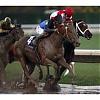
Curlin and Hard Spun finish 1,2 in the 2007 BC Classic, demonstrating how competing in all three Triple Crown races ruins a horse for the rest of the year...see avatar
photo from REUTERS/Lucas Jackson
Reply With Quote
  #18  
Old 09-16-2006, 02:04 PM
Bold Brooklynite
 
Posts: n/a
Default

Quote:
Originally Posted by Dunbar
I don't think current trainers are either dumber or smarter than those 20 years ago. (Hell, many of the best today were training 20 years ago.) I think it's more a factor of what's fashionable (and follow the leader). It's only natural to fear making a mistake. If your horse is injured in a race, you are more likely to be harshly judged if the horse ran recently than if it ran after a big break. Yet I doubt there is any real evidence to support that judgement.

Rupert questions why ALL the best trainers today favor more spacing between races. It's a good question. But if it turns out that good horses run just as well on 2-3 weeks rest, it wouldn't be the first time that a whole group of the leaders of some endeavor were found to be taking a non-optimal approach.

--Dunbar
Absolutely right.

As I said in an earlier post on this thread ... the objectives of trainers have changed ...

... today it's shoot for one big score ... then begin syndication negotiations.

Trainers today are in a different business than trainers were 25 years ago and more ... and I repeat ... it's killing the sport.
Reply With Quote
  #19  
Old 09-16-2006, 03:47 PM
Phalaris1913's Avatar
Phalaris1913 Phalaris1913 is offline
Sunshine Park
 
Join Date: Jul 2006
Location: Arizona
Posts: 81
Default

Quote:
Originally Posted by Bold Brooklynite
Absolutely right.

As I said in an earlier post on this thread ... the objectives of trainers have changed ...

... today it's shoot for one big score ... then begin syndication negotiations.

Trainers today are in a different business than trainers were 25 years ago and more ... and I repeat ... it's killing the sport.

At the end of the day, I agree. I don't believe that modern trainers are idiots. They are charged with producing successful horses based on a different paradigm than previous times. People want one-time brilliance, or a few easy romps unmarred by defeats. Therefore, there is a modern tendency to make every start count. The traditional idea of a "prep race," a race in which a horse runs to gauge its current form and fitness and to tighten it up for an upcoming target race, is utterly obsolete and foreign. You don't see in-form, high-class horses running in allowance races anymore and now, we're starting to see them skip stakes races seen as preliminary to the races that matter. BB and I recall times when the best horses ran in the Woodward, Marlboro Cup AND Jockey Club Gold Cup; just one of many series of once-prominent races that have diminished (or disappeared entirely) due to lack of interest. Ironically, now that there are many times the number of stakes races as there were a few decades ago, a given stakes-caliber horse will run in fewer of them. The inevitable result: the handful of best horses are spread among several races, creating poor fields with one or two good horses up against a few lower-quality animals who have nothing to lose in showing up and being beaten.

The "make every start count" theory of racing and training horses not only dictates avoiding minor races or serious competition for as long as possible, it also requires avoiding anything that might prove a challenge for their horse. Some of us remember when serious handicap horses ran in Carter Handicap and Met Mile, because it wasn't assumed that a horse capable of getting 10 or 12 furlongs was utterly incapable of - or at least irretrievably harmed by - running in a race less than 8.5 or 9 furlongs. You saw major turf winners runnning in major races on the dirt, and vice versa. You saw 3YOs taking on older horses and fillies in against open company. Lots of times this resulted in defeat, but when good horses were running 10 or 15 times a year, a defeat or two didn't ruin your resume.

The result was high-class horses with more defeats, but also better, more interesting sport - unless, I suppose, you groove on the idea of a handful of MLB teams playing a half-dozen times a year mainly against collegiate-caliber competition with championships determined at the end by a single inning in a single game against whatever shows up - no playoffs neeeded. Compared to a real baseball season, that's pretty much what horse racing has turned into and there are some of us who lament what has been lost. We're not going to apologize for our feelings on the subject, either.

Current trainers of good horses have a completely different sort of expectation placed upon them and they are sorting themeselves out by those who are best able to spot horses in places where they can win. We can't reasonably accuse them of incompetence for failing to turn out horses of a more traditional mold, because they are not even sort of trying to do so. When (and it is a matter of when) the artificial bubble that is the thoroughbred bloodstock market pops, some of them will convert themselves to a new situation - in which horses are worth what they can earn on the track - just fine, just as many of their horses, trained and campaigned with this in mind, will. I firmly believe that most thoroughbred foals cavorting on a farm somewhere today are capable of much better, and much more, than their older brothers and sisters are producing. The difference is in the intent of those who prepare and campaign them - not necessarily the horsemanship of those people.
Reply With Quote
  #20  
Old 09-16-2006, 06:26 PM
Rupert Pupkin Rupert Pupkin is offline
Del Mar
 
Join Date: Jun 2006
Posts: 5,102
Default

Quote:
Originally Posted by Dunbar
It's facts like this that lead me to believe that Phalaris and BB are on the right side of this argument. The breed hasn't changed THAT much in 20 years. Horses used to run on 2-3 weeks rest (or even shorter) routinely. Have trainers REALLY gotten so much smarter in the last 20 years?

I don't think current trainers are either dumber or smarter than those 20 years ago. (Hell, many of the best today were training 20 years ago.) I think it's more a factor of what's fashionable (and follow the leader). It's only natural to fear making a mistake. If your horse is injured in a race, you are more likely to be harshly judged if the horse ran recently than if it ran after a big break. Yet I doubt there is any real evidence to support that judgement.

Rupert questions why ALL the best trainers today favor more spacing between races. It's a good question. But if it turns out that good horses run just as well on 2-3 weeks rest, it wouldn't be the first time that a whole group of the leaders of some endeavor were found to be taking a non-optimal approach.

--Dunbar
What do you mean "If it turns out that good horses run just as well on 2-3 weeks rest?" We know that they don't. Maybe they did 40 years ago but they don't today. You act like they still don't know the answer as to whether good horses run just as well on short rest. We know they don't. Any good trainer will tell you this. They're not guessing. It's not just a hypothesis. They see their horses every day. As I said in an eariler post, any good trainer can see the effects of their training on their horses. If every time you start galloping a horse 2 miles a day as oppose to 1 1/2 miles a day, the horse starts losing weight, it's obvious that the extra exercise is amking the horse lose weight. Most of this stuff is not rocket science. A good trainer will notice even subtle changes in their horses.

There have been times that Todd Pletcher has said, "I hate to bring the horse back in 3 weeks. I wish I had more time." Why do you think he says this? Do you think he's just guessing that 3 weeks isn't enough time? He knows from experience.

Your contention that sometimes leaders don't take the optimal approach is not applicable here. Trainers have tried both methods. This isn't multiple choice either. There are two choices here: 2-3 weeks off vs 4-5 weeks off. They've tried both a million times. They can see what works better.

Last edited by Rupert Pupkin : 09-16-2006 at 06:28 PM.
Reply With Quote
Reply


Posting Rules
You may not post new threads
You may not post replies
You may not post attachments
You may not edit your posts

vB code is On
Smilies are On
[IMG] code is On
HTML code is Off
Forum Jump


All times are GMT -5. The time now is 07:13 PM.


Powered by vBulletin® Version 3.6.8
Copyright ©2000 - 2025, Jelsoft Enterprises Ltd.